
Israeli Political Shift: Gadi Eisenkot Tapped to Form Government as Netanyahu Faces Coalition Challenge
The former Israeli military chief receives the mandate to build a governing coalition after the October election leaves parliament divided between rival political blocs.
By HarisTimes
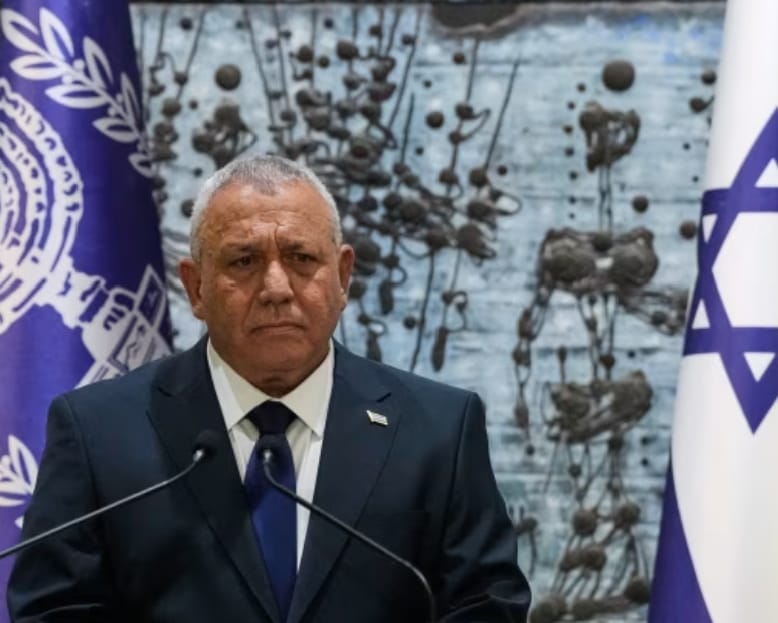
Israeli Political Shift: Gadi Eisenkot Tapped to Form Government as Netanyahu Faces Coalition Challenge
Israel has entered a new phase of political uncertainty after President Isaac Herzog tasked opposition leader Gadi Eisenkot with forming the country’s next government. The decision follows the October 27, 2026, general election, which produced a divided parliament and left neither major political bloc with the seats required to govern independently.
Eisenkot, a former chief of the Israel Defense Forces and leader of the Yashar party, received the mandate after consultations with political factions represented in the Knesset. His appointment gives him the first opportunity to negotiate a governing coalition and potentially replace Prime Minister Benjamin Netanyahu, whose political bloc lost its parliamentary majority.
The decision marks an important development in Israeli politics. However, receiving the mandate does not guarantee that Eisenkot will become prime minister. He must now secure sufficient support from parties with different political priorities, policy positions and demands.
President Herzog Gives Eisenkot the Mandate
President Isaac Herzog announced on November 7 that he intended to appoint Eisenkot to form the next government. The formal mandate was handed to him during a ceremony at the president’s residence in Jerusalem on November 8.
According to the Israeli presidency, political factions representing 67 members of the Knesset recommended Eisenkot for the task during consultations. By comparison, factions representing 46 lawmakers recommended Netanyahu, while representatives of another seven lawmakers did not endorse either candidate.
The recommendations provided Herzog with a basis for selecting the candidate who would receive the first opportunity to build a coalition.
Under Israel’s parliamentary system, the president assigns a lawmaker the responsibility of forming a government following consultations with political parties. The selected candidate must then negotiate with other factions and demonstrate sufficient parliamentary support.
Eisenkot has 28 days to complete the task. The president can grant an extension of up to 14 additional days if necessary.
Election Results Leave Israel Without a Clear Majority
The October 27 election produced a divided 120-seat Knesset, Israel’s national parliament. Neither Netanyahu’s political bloc nor the opposition alliance led by Eisenkot secured the 61 seats needed for a parliamentary majority.
Netanyahu’s Likud party won 27 seats, making it the largest individual party in the parliament. His broader right-wing and religious coalition secured 53 seats.
Eisenkot’s Yashar party won 21 seats as part of a four-party opposition alliance that collectively secured 48 seats. Arab-led parties won a combined 19 seats, giving them a significant position in the post-election political negotiations.
These results created a complicated parliamentary situation. Netanyahu’s bloc remains the largest political grouping, but it cannot govern without additional support. Eisenkot’s alliance also falls short of a majority and must find partners willing to support a new administration.
The distribution of seats means that smaller political parties and independent parliamentary groups could play an important role in deciding the next government’s composition.
Eisenkot’s Political and Military Background
Gadi Eisenkot is a former senior Israeli military officer who served as chief of the Israel Defense Forces from 2015 to 2019. His military career has made national security and defence central parts of his public profile.
After leaving military service, Eisenkot entered politics and became a prominent figure in the opposition to Netanyahu. He leads the Yashar party and participated in the election as a leading challenger to the incumbent prime minister.
His political position is shaped partly by his experience in Israel’s security establishment. He has also been involved in government discussions during the country's recent conflicts, including serving as an observer in Netanyahu’s war cabinet during the early months of the war in Gaza.
His appointment to form a government therefore brings a former military chief into the centre of a political process dominated by questions about national security, military policy, public confidence and the future direction of Israel’s government.
Arab-Led Parties Become Important to Coalition Negotiations
One of the most complicated issues facing Eisenkot is the position of Arab-led political parties. Their combined 19 seats could provide crucial parliamentary support to an opposition-led government.
During the presidential consultations, Arab-led factions contributed to the 67 lawmakers who recommended Eisenkot for the mandate. Their support helped establish his position as the candidate with the largest number of parliamentary endorsements.
However, political cooperation remains uncertain. Eisenkot has expressed reservations about forming a government directly with Arab-led parties, and other members of his political alliance have their own concerns about relying on their support.
One possible arrangement would involve Arab-led parties supporting a government from outside the formal coalition. Such an agreement could allow Eisenkot to obtain the parliamentary votes needed to take office without including those parties as full coalition partners.
This approach would still involve negotiations over policy commitments and parliamentary cooperation. Arab political leaders have indicated that their support is connected to political and public-policy considerations, including opposition to Netanyahu’s governing alliance.
The arrangement could also face resistance from parties that oppose relying on Arab-led lawmakers to sustain a government. As a result, Eisenkot must consider not only the number of available parliamentary votes but also whether potential coalition partners can agree on the conditions of cooperation.
Religious Parties and Coalition Compromises
Another possible route involves negotiations with ultra-Orthodox political parties, including Shas and United Torah Judaism.
These parties have traditionally played important roles in Israeli coalition politics. Their parliamentary support could help Eisenkot reach the required majority, but cooperation would likely involve difficult discussions over religious, social and military-service policies.
One particularly sensitive issue concerns exemptions from compulsory military service for many ultra-Orthodox men.
The question has been a major source of disagreement in Israeli politics. Parties differ over whether exemptions should continue, how military service requirements should be enforced and what arrangements should apply to religious communities.
Eisenkot and some of his political allies have supported changes to the existing arrangements, including greater equality in military-service obligations. Ultra-Orthodox parties, however, have their own priorities and may seek guarantees before supporting a new government.
Negotiations over these issues could therefore become a significant test of whether Eisenkot can build a coalition that satisfies enough lawmakers without abandoning key campaign commitments.
Netanyahu Remains a Central Figure in the Political Process
Although Herzog has given Eisenkot the first opportunity to form a government, Netanyahu remains an influential figure in the negotiations.
Netanyahu has led Israel for extended periods and continues to head the Likud party, which won the largest number of seats in the October election. His broader political bloc, despite falling short of a majority, retains substantial parliamentary representation.
Netanyahu has called for a national unity government, arguing that Israel faces major security and political challenges that require a broad governing arrangement.
Eisenkot has indicated that he is open to discussing a unity government under certain conditions. In remarks reported after receiving the mandate, he suggested that members of Likud and the Religious Zionist Party could support a government under his leadership if they genuinely supported national unity and the principles he had presented.
Such an arrangement would represent a significant change in Israel’s political leadership, but it would require agreement between politicians who have been competing against one another.
The possibility of Netanyahu joining or supporting a government led by Eisenkot therefore remains part of the wider political discussion. Neither the appointment nor the public statements made during the initial consultations establish that such an agreement has been reached.
What Happens if Eisenkot Cannot Form a Government?
The next several weeks will be important for Israel’s political future. Eisenkot must negotiate with potential coalition partners, address their policy demands and establish that his proposed government can obtain parliamentary confidence.
If he fails within the initial 28-day period, he may request an extension of up to 14 days from President Herzog.
If the process remains unsuccessful, the president can give another candidate an opportunity to form a government. Netanyahu could become part of a subsequent effort, depending on the outcome of the negotiations and the parliamentary situation.
Israel’s constitutional process also provides further steps for parliament to consider another candidate. If no government can be formed through the available procedures, the country could eventually face another election.
During the negotiations, Netanyahu is expected to remain in office as caretaker prime minister until a new government is established.
National Security and Regional Policy Remain Key Issues
The formation of a new Israeli government will have implications beyond domestic party politics. Israel faces continuing security challenges, regional tensions and international diplomatic pressures.
The next administration will have to address defence policy, relations with neighbouring countries, the conflict involving Palestinians, the future of Gaza and Israel’s wider regional relationships.
These subjects could also influence coalition negotiations. Political parties may agree on the need for national security but differ over military strategy, diplomatic engagement, settlement policy and the government’s approach to the Palestinian territories.
The role of the United States and Israel’s broader international relationships will also remain important. President Herzog referred to changes in the international political environment when discussing the need for a stable government.
However, the precise direction of any new administration will depend on its coalition agreement and the priorities of the parties that ultimately join or support it.
Eisenkot’s ability to secure a working parliamentary majority will therefore determine not only who leads the government but also which political commitments shape its domestic and foreign policies.
Conclusion: A New Stage in Israel’s Coalition Politics
Gadi Eisenkot’s appointment marks a significant development in Israel’s political process after an election that left the country without a clear parliamentary majority. President Isaac Herzog has given him the first opportunity to form a government, reflecting the larger number of lawmakers who recommended him during the presidential consultations.
Nevertheless, the challenge ahead is substantial. Eisenkot must find common ground among opposition parties, consider the role of Arab-led lawmakers and address disagreements with religious and other political factions. Netanyahu and Likud also remain important participants in the unfolding negotiations.
The coming weeks will reveal whether Eisenkot can translate his mandate into a functioning coalition or whether the political deadlock will continue. For now, his appointment has opened a new chapter in Israel’s government-formation process, but the country's next political leadership has yet to be determined.

Written by
Haris Times StaffComments (0)
No comments yet. Be the first!