
Israel Election Results: Netanyahu and Opposition Fall Short of Parliamentary Majority
With vote counting nearing completion, coalition negotiations are expected to determine the next government as political blocs seek the support needed to reach a majority in the Knesset.
By HarisTimes
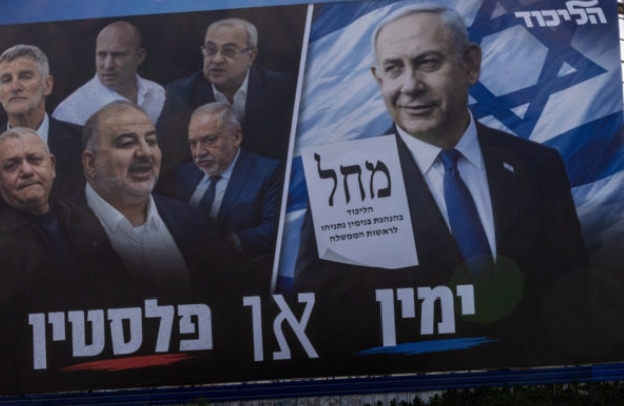
Israel Election Produces No Clear Parliamentary Majority
Israel’s national election has left the country facing a potentially prolonged process to form its next government, with neither Prime Minister Benjamin Netanyahu’s political bloc nor the main opposition grouping securing a parliamentary majority.
The October 27 election was closely watched as a test of Netanyahu’s leadership following the security failures surrounding the October 7, 2023, attacks and the regional conflicts that followed.
Provisional results initially reported on October 28, after 85.6% of the total vote had been counted, gave Netanyahu’s bloc 53 seats, the opposition led by former military chief Gadi Eisenkot 48 seats, and Arab-led parties a combined 19 seats.
By October 29, later reporting indicated that counting had progressed further and the provisional distribution had changed. One results tracker reported Netanyahu’s bloc at 54 seats, the opposition at 48 and Arab-led parties at 18. These figures remained provisional pending completion of the official count.
Netanyahu’s Bloc Remains Short of a Majority
Netanyahu’s Likud party and its right-wing, far-right and ultra-Orthodox allies were projected to hold the largest bloc in the next Knesset, but their combined seats remained below the threshold needed to govern independently.
The 120-member Knesset requires at least 61 seats for a parliamentary majority. Even with the largest bloc, Netanyahu would need support from additional lawmakers or parties to establish a governing coalition.
The election results therefore do not automatically determine who will serve as prime minister. Netanyahu could seek agreements with other political groups, while negotiations could also explore a broader coalition arrangement.
The final outcome will depend on the official seat allocation, the positions of smaller parties and the willingness of political leaders to compromise on policy and ministerial appointments.
Eisenkot’s Opposition Bloc Faces Its Own Challenges
The opposition bloc led by Gadi Eisenkot was projected to hold 48 seats in the provisional results reported on October 29, leaving it well short of a majority.
Eisenkot, a former Israel Defense Forces chief of staff and leader of the Yashar party, has challenged Netanyahu over leadership, national security and government accountability.
Although the opposition could seek support from parties outside its core bloc, assembling a stable majority would require negotiations among groups with differing political priorities.
Cooperation with Arab-led parties could provide additional parliamentary support, but it remains politically contentious. Several Jewish-led opposition parties have expressed reservations about relying on Arab parties to form a government.
These disagreements could complicate efforts to build an alternative coalition, even if the combined seat totals appear sufficient on paper.
Arab-Led Parties Gain Significant Representation
Arab-led parties emerged as an important factor in the post-election calculations. Early provisional results put their combined representation at 19 seats, a historic high, although later tallies indicated that the number could change as counting continued.
Their parliamentary representation gives them potential influence in negotiations over the next government. If the major political blocs remain short of 61 seats, the positions taken by Arab-led parties could affect which coalition arrangements are possible.
However, the number of seats alone does not guarantee that these parties will participate in a governing coalition. Political differences, security policy and disagreements over government priorities could limit the scope for cooperation.
The results also reflect the importance of Arab voters in determining the composition of the next parliament and the range of possible political arrangements.
Coalition Negotiations Could Take Time
Israel’s parliamentary system allows a government to be formed through agreements among parties that collectively command a majority in the Knesset. This means coalition negotiations can be as consequential as the election itself.
The president of Israel has a formal role in the government-formation process and, following consultations with political parties, assigns a lawmaker the task of attempting to form a government.
If no candidate can assemble sufficient support, negotiations may continue or another election could eventually become necessary. Until a new government is formed, the outgoing administration generally remains in a caretaker capacity.
For Netanyahu and Eisenkot, the challenge is therefore not simply to lead their respective blocs but to identify partners capable of supporting a functioning government.
Final Results Still Matter
The seat totals reported during counting are provisional and can change before the Central Elections Committee completes and certifies the results.
The difference between early figures and later updates illustrates why the vote count should be treated carefully. The reported 85.6% count on October 28 gave Arab-led parties 19 seats, while a later tracker on October 29 showed 18. The final allocation will determine the precise parliamentary balance.
Until official results are finalized, claims about the composition of the next government should remain cautious. Even after the count is complete, the identity of the next prime minister will depend on the coalition-formation process.
Conclusion
Israel’s 2026 election has left Netanyahu’s bloc and the opposition led by Eisenkot without an independent parliamentary majority. Arab-led parties have gained substantial representation and may influence coalition negotiations, although their role will depend on political agreements and the final seat distribution.
The immediate focus is on completing the vote count and determining whether Netanyahu can assemble a governing coalition, whether the opposition can secure sufficient support, or whether Israel faces an extended political impasse.
The election has established a fragmented parliament, but the final outcome will be determined by the official results and the negotiations that follow.

Written by
Haris Times StaffComments (0)
No comments yet. Be the first!