
Putin Hosts African Leaders at Third Russia-Africa Summit in Moscow
The October 28–29 gathering brings together delegations from across Africa as Moscow seeks to expand economic ties and strengthen its partnerships with the continent.
By HarisTimes
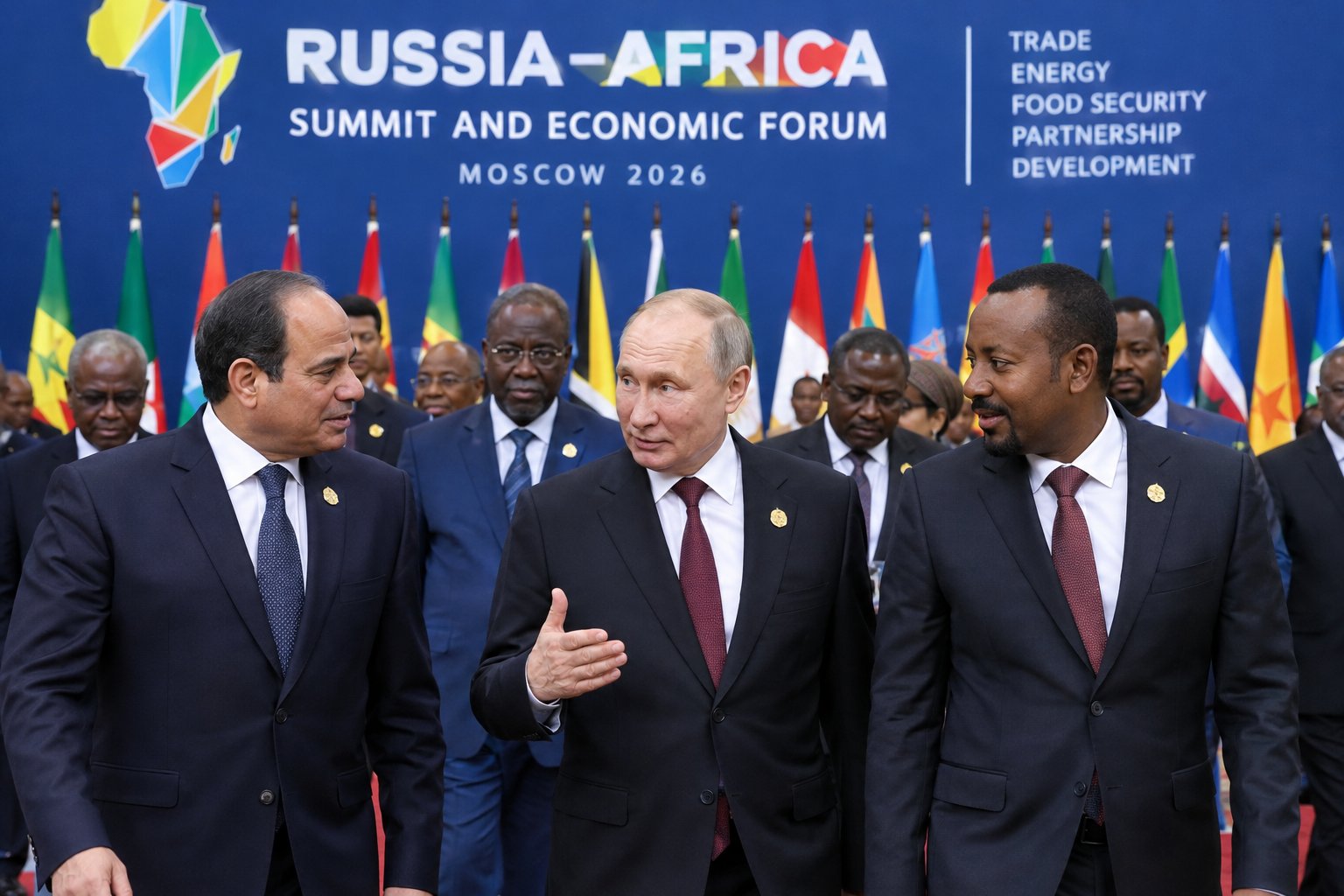
Putin Welcomes African Leaders to Moscow
Russian President Vladimir Putin is hosting the third Russia-Africa Summit and Economic and Humanitarian Forum in Moscow on October 28–29, 2026, as Russia and African countries seek to expand cooperation across economic, political and strategic sectors.
The summit follows earlier gatherings in Sochi in 2019 and St. Petersburg in 2023. Russian officials have said that delegations from 48 of Africa’s 54 countries have confirmed participation, with 22 countries expected to be represented by their heads of state.
Putin is co-chairing the summit with Burundi’s President Évariste Ndayishimiye, who currently chairs the African Union. The gathering provides a platform for discussions between Russia, African governments and regional organizations on trade, investment, agriculture, energy, infrastructure and diplomatic cooperation.
Trade and Investment at the Centre of Discussions
Expanding trade and investment is a central priority of the Moscow summit. Discussions are expected to address opportunities for increasing commercial exchanges, developing transport links, supporting local manufacturing and improving financial cooperation.
According to figures cited by Russian officials ahead of the summit, Russia’s trade with African countries exceeded $27 billion in 2025. Moscow has indicated that it wants to expand these exchanges and broaden the range of goods and services traded with African partners.
The accompanying Economic and Humanitarian Forum includes sessions involving businesses, government representatives and industry specialists. Topics include investment, logistics, agricultural technology, digital services, education and industrial development.
Participants are also expected to consider a Russia-Africa Partnership Forum action plan covering 2027–2029, alongside declarations and agreements intended to guide future cooperation.
Energy Partnerships and Grain Security
Energy cooperation is another important issue on the agenda. Russia and several African countries have existing partnerships involving conventional energy, nuclear power and related infrastructure.
One prominent example is the El Dabaa nuclear power plant project in Egypt, which is being constructed with the involvement of Russia’s state nuclear corporation, Rosatom.
Agriculture and food security are also expected to feature prominently in the discussions. Russia is a major international supplier of wheat and fertilizers, while many African countries are seeking reliable access to agricultural inputs and affordable food supplies.
The talks are expected to cover grain exports, fertilizer availability, agricultural technology, food processing and transport infrastructure. These issues have gained importance as governments work to reduce supply disruptions and strengthen domestic food systems.
Any new supply arrangements or commercial agreements announced during the summit will need to be assessed individually once their terms are made public.
Putin’s Bilateral Meeting With Egypt’s El-Sisi
Egyptian President Abdel Fattah el-Sisi arrived in Moscow on October 28 to lead Egypt’s delegation to the summit. Egypt’s presidency confirmed that he is scheduled to hold bilateral talks with Putin.
The two countries have longstanding economic and diplomatic relations, including cooperation in energy, agriculture and infrastructure. Russia’s involvement in Egypt’s El Dabaa nuclear power project and its role as a wheat supplier are among the established areas of cooperation.
El-Sisi’s participation is also significant in the context of the summit’s history. He co-chaired the first Russia-Africa Summit with Putin in Sochi in 2019, when Egypt held the African Union chairmanship.
The Moscow meeting offers both governments an opportunity to review existing projects and discuss potential areas for further cooperation.
Ethiopia and Wider African Engagement
Ethiopian Prime Minister Abiy Ahmed is among the African leaders expected to participate in the Moscow summit and hold talks with Putin.
Ethiopia’s participation reflects the broader effort by Russia and African governments to maintain diplomatic engagement and explore cooperation in economic development, agriculture, energy and other sectors.
The summit also brings together representatives of regional organizations, providing an opportunity to discuss issues that affect multiple countries, including trade integration, infrastructure development and regional stability.
African governments have differing economic priorities and foreign-policy positions. The outcomes of the summit will therefore depend on the agreements reached between individual countries as well as the broader commitments adopted by participants.
Strategic Diplomacy and International Relations
The summit takes place amid continuing geopolitical tensions and international debate over Russia’s role in global affairs. Moscow has sought to strengthen ties with countries across Africa, while African governments have pursued a range of international partnerships to advance their own economic and diplomatic interests.
For participating countries, engagement with Russia can offer opportunities involving trade, energy, agricultural supplies, technology and investment. At the same time, governments must weigh the financial, diplomatic and geopolitical implications of individual agreements.
The summit provides a forum for discussing these priorities, but participation does not necessarily indicate that African countries share identical positions on international conflicts or foreign policy.
Expected Outcomes of the Summit
Russian officials have indicated that participants are expected to adopt a final declaration and a partnership action plan for 2027–2029. A separate declaration on cooperation in the civilian use of artificial intelligence is also planned.
Additional intergovernmental agreements, memorandums and commercial arrangements may be announced during the gathering. Their significance will depend on the commitments involved, the resources allocated and whether the agreements are implemented.
The summit’s results will provide an indication of how Russia and its African partners intend to develop their relationship over the next several years.
The third Russia-Africa Summit in Moscow brings together Russian and African leaders to discuss trade, energy, food security, investment and diplomatic cooperation. Putin’s scheduled meetings with El-Sisi, Abiy Ahmed and other visiting leaders form part of a wider effort to expand bilateral and regional engagement.
The summit’s longer-term significance will depend on the agreements reached and the extent to which announced initiatives translate into practical economic and diplomatic outcomes.

Written by
Haris Times StaffComments (0)
No comments yet. Be the first!